
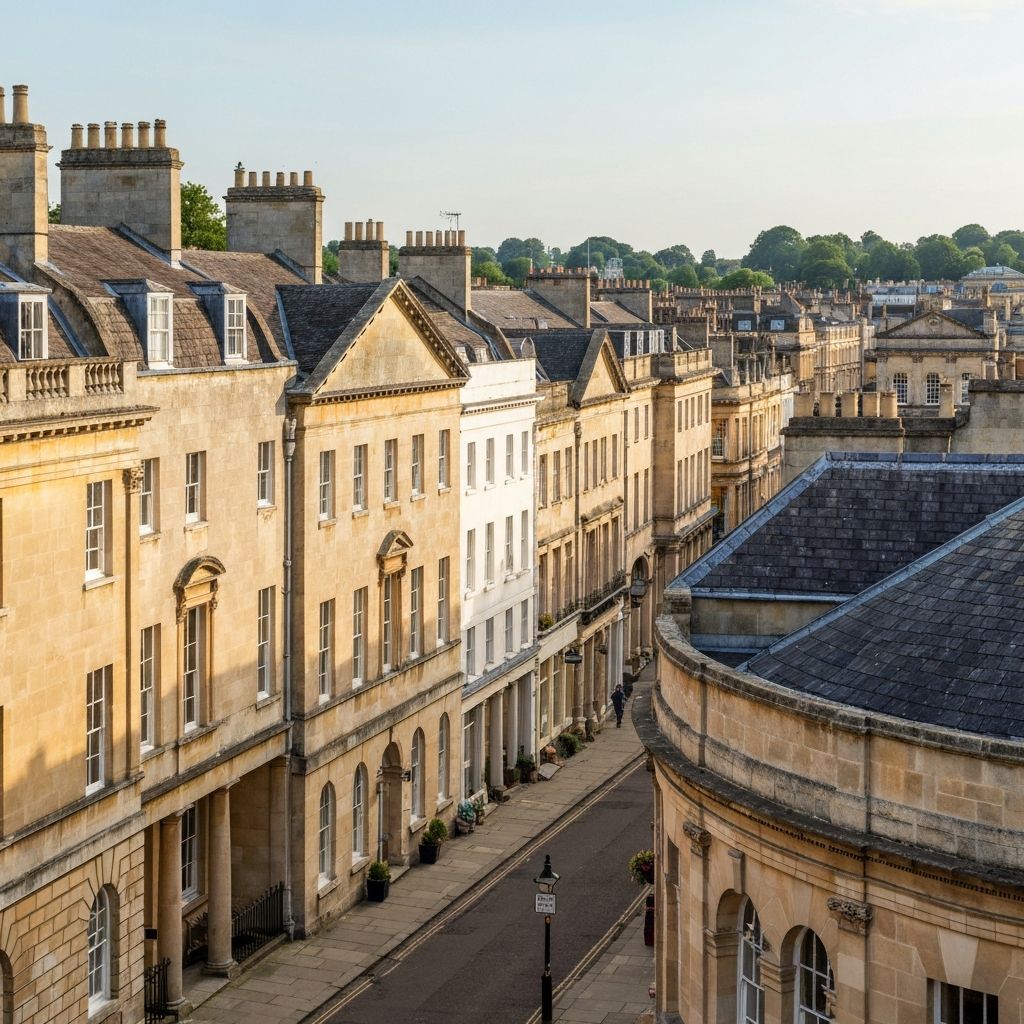
Bath and Georgian Charm
Step back in time in this elegant Georgian city with its Roman heritage and stunning architecture
Bath, located in Somerset in southwest England, stands as one of the most remarkable cities in the United Kingdom. Known for its stunning Georgian architecture, Roman heritage, and natural thermal springs, Bath offers visitors a journey through centuries of history combined with contemporary sophistication. UNESCO recognized Bath's historic center as a World Heritage Site in 1987, acknowledging its outstanding universal value. This elegant city, with its honey-colored stone buildings arranged on hillsides, creates an atmosphere of refined beauty and cultural significance that captivates all who visit. If you're planning to visit Bath, make sure you have the required UK ETA before your trip. Discover why Bath remains one of Britain's most beloved destinations.
Georgian Architecture and Urban Design
Bath's distinctive appearance results from a remarkable Georgian building boom during the 18th century. Following the rediscovery of the town's thermal springs in the 1700s, Bath became England's most fashionable resort destination. Architects like John Wood the Elder and John Wood the Younger transformed Bath into a masterpiece of urban planning. The Royal Crescent, a perfect semicircular row of 30 townhouses built between 1767 and 1774, represents Georgian architecture at its finest. The curved design maximizes light and creates a unified aesthetic while allowing each property individuality. The Circus, another architectural triumph, features 33 townhouses arranged in a perfect circle with classical proportions. The Assembly Rooms hosted the social events that made Bath famous, with their elegant ballrooms, tea rooms, and reading rooms showcasing 18th-century refined living. Walking through Bath's streets feels like stepping into a architectural museum—Queen Square, The Circus, The Royal Crescent, and Brock Street form a harmonious composition of architectural excellence. This consistency and quality of Georgian design throughout the city makes Bath unique among British cities. International visitors interested in exploring Bath's architectural wonders should check the UK ETA requirements to ensure smooth entry.
Roman Heritage and the Thermal Springs
Bath's history extends far back to Roman times. The Romans established the city of Aquae Sulis—Waters of Sulis—recognizing the therapeutic properties of the natural hot springs. The hot springs produce approximately 240 gallons of water daily at a consistent temperature of 46.5°C, making them unique in Britain. The Romans built elaborate bath complexes and temples around the springs, remnants of which remain visible today. The Roman Baths Museum preserves and displays artifacts including statuary, coins, jewelry, and inscriptions, providing insights into Roman life and religious practices. The sacred temple dedicated to Sulis Minerva combined Celtic and Roman religious traditions, with visitors leaving offerings seeking divine healing and blessing. The naturally heated water drew people seeking relief from ailments and general wellness, practices that continue today. The Thermae Bath Spa, a contemporary wellness center, allows modern visitors to experience the thermal waters in both traditional and contemporary settings, combining historical experience with contemporary spa facilities. Understanding Bath's Roman foundation enriches appreciation for the layers of history that make the city extraordinary.
Cultural and Literary Significance
Bath occupies a special place in English literature and culture. Jane Austen lived in Bath from 1801 to 1806 and set scenes from two of her novels—Northanger Abbey and Persuasion—in the city. The Jane Austen Centre explores her life in Bath and her influence on literature. The city inspired numerous writers and artists attracted by its combination of refinement and drama. Bath's social scene, documented in contemporary accounts and literature, portrayed both the genuine friendships and the superficial alliances that characterized 18th-century genteel society. Literary festivals, theatrical productions, and cultural events continue Bath's traditions of intellectual and artistic engagement. The city's influence on British culture extends beyond literature into fashion, manners, and social conventions that defined Georgian society and continue influencing contemporary British identity. Exploring Bath through Austen's novels and contemporary literature provides unique insights into both historical life and timeless human experiences. For those planning their UK ETA visit to experience Bath's literary heritage, apply for your UK ETA today to begin your journey.
Museums and Cultural Attractions
Beyond its architectural splendors, Bath offers numerous museums and cultural institutions. The Royal Crescent House Museum, located within the Royal Crescent, presents a restored 18th-century townhouse showing authentic period furnishings and domestic life. The Bath Abbey, dating from the early 16th century, represents magnificent perpendicular Gothic architecture and remains an active church featuring choral evensongs. The Holburne Museum houses an outstanding collection of decorative arts, paintings, and sculptures in its 18th-century building. The Building of Bath Museum explains the construction techniques and materials used to create Bath's distinctive appearance. The Sally Lunn's Historic Eating House serves traditional Sally Lunn buns—a local speciality—in what is claimed to be Bath's oldest building. These attractions provide comprehensive understanding of Bath's history, culture, and contemporary vitality.
Dining and Culinary Experiences
Bath's culinary scene reflects its status as a sophisticated cultural destination. Michelin-starred restaurants offer innovative cuisine emphasizing local ingredients and refined preparation. The Scallop Shell focuses on seafood with Mediterranean influences. Pump Restaurant & Champagne Bar serves traditional British cuisine. Numerous independent restaurants, cafes, and tea rooms throughout the city reflect diverse culinary traditions and casual sophistication. The Bath Farmers Market, held Saturday mornings, showcases local produce and artisan food producers. Independent chocolatiers, cheese makers, and delis throughout the city offer gourmet specialties. Traditional afternoon tea experiences, served in historic venues, recreate 18th-century refinement. The combination of excellent restaurants, quality local produce, and sophisticated dining culture makes Bath an exceptional culinary destination.
Activities and Day Excursions
Explorations within Bath include walking tours of the historic center, visiting spas and thermal facilities, attending theatrical and musical performances, and pursuing shopping in independent boutiques. The nearby Cotswolds, approximately 30 minutes away, feature picturesque honey-stone villages like Bourton-on-the-Water and Chipping Campden. Stonehenge lies approximately 40 kilometers away, accessible as a day trip. The Roman town of Caerleon and Cardiff Castle in Wales represent other nearby historical attractions. The Avon Gorge and Clifton Bridge near Bristol offer natural scenery and engineering marvels. Bath's excellent public transportation connections and its position as a regional hub make it an ideal base for exploring surrounding attractions while maintaining its focus as a sophisticated urban destination.
Practical Visitor Information
Bath is easily accessible by train from London Paddington (approximately 90 minutes) and Bristol Airport (approximately 30 minutes). Accommodation ranges from luxury hotels to charming bed-and-breakfast properties and contemporary budget options. Spring and autumn offer ideal visiting conditions with pleasant weather and manageable crowds. Summer attracts maximum tourists, offering full programming but significant crowds. Winter provides quieter atmosphere with special festive programming. Walking represents the best way to explore Bath's historic center—the compact size and pedestrian-friendly streets make self-guided exploration enjoyable. Official guided tours, available daily, provide historical context and access to some private properties. The Bath Tourism Centre provides current information on attractions, events, and accommodations.
Bath represents a unique combination of Roman history, Georgian perfection, cultural sophistication, and contemporary vitality. Whether seeking historical immersion, architectural appreciation, spa treatments, literary connections, or simply the refined pleasure of walking through one of Europe's most beautiful cities, Bath delivers an experience of remarkable depth and enduring beauty. The city's ability to honor its distinguished past while embracing contemporary cultural life makes Bath a destination that rewards extended exploration and inevitably invites return visits. Ensure you have your UK ETA arranged before your visit to make the most of your Bath experience.